

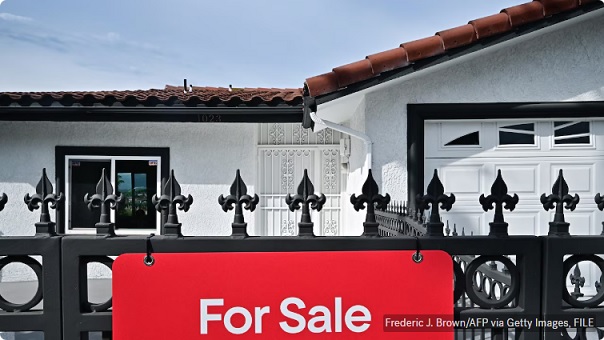
Mortgage rates whipsawed in recent weeks as markets reacted to a flurry of policies from the Trump administration.
It began with a major milestone. Mortgage rates earlier this month fell below 6% for the first time in nearly three years, according to a data released by Mortgage News Daily.
"The progress stems directly from President Trump's aggressive agenda to restore the American Dream of homeownership," the White House touted in a statement on Jan. 12. The Trump administration cited its announcement days earlier, calling on government-sponsored mortgage lenders to purchase $200 billion in mortgage-backed securities.
Within little more than a week, however, mortgage rates had climbed to 6.21%, responding to rattled bond markets and erasing the previous reduction. The uptick came as Trump issued a tariff threat to European allies over his demands to acquire Greenland at the time. When Trump backed off of that levy soon afterward, mortgage rates fell but remained above previous lows, Mortgage News Daily data showed.
The volatility in mortgage rates underscored the risks posed by recent trade tensions, which threaten to push up Treasury yields and, in turn, drive mortgage rates higher, some analysts told ABC News.
Still, they added, mortgage rates will likely face downward pressure this year from anticipated interest-rate cuts at the Federal Reserve, and Trump may take further steps of his own to reduce borrowing costs.
"President Trump is certainly not sitting back and doing nothing," Susan Wachter, a professor of real estate at University of Pennsylvania's Wharton School of Business, told ABC News.
"Some of it is big things on the international front, which are potentially destabilizing. And there's an attempt to do anything and everything for the affordability of housing," Wachter added.
To be sure, average 30-year mortgage rates have dropped from 7.08% to 6.17% since Trump took office, according to Mortgage News Daily. That drop-off owes in part to a post-pandemic cooldown of inflation, which allowed the Federal Reserve to begin lowering interest rates.
In a social media post earlier this month, Trump said lower mortgage rates would "make the cost of owning a home more affordable. It is one of my many steps in restoring Affordability."
Mortgage rates closely track the yield on a 10-year Treasury bond. Since bonds pay a given investor a fixed amount each year, the specter of inflation risks higher prices that would eat away at those annual payouts. In turn, bonds often become less attractive in response to economic turmoil. When demand falls, bond yields rise.
It began with a major milestone. Mortgage rates earlier this month fell below 6% for the first time in nearly three years, according to a data released by Mortgage News Daily.
"The progress stems directly from President Trump's aggressive agenda to restore the American Dream of homeownership," the White House touted in a statement on Jan. 12. The Trump administration cited its announcement days earlier, calling on government-sponsored mortgage lenders to purchase $200 billion in mortgage-backed securities.
Within little more than a week, however, mortgage rates had climbed to 6.21%, responding to rattled bond markets and erasing the previous reduction. The uptick came as Trump issued a tariff threat to European allies over his demands to acquire Greenland at the time. When Trump backed off of that levy soon afterward, mortgage rates fell but remained above previous lows, Mortgage News Daily data showed.
The volatility in mortgage rates underscored the risks posed by recent trade tensions, which threaten to push up Treasury yields and, in turn, drive mortgage rates higher, some analysts told ABC News.
Still, they added, mortgage rates will likely face downward pressure this year from anticipated interest-rate cuts at the Federal Reserve, and Trump may take further steps of his own to reduce borrowing costs.
"President Trump is certainly not sitting back and doing nothing," Susan Wachter, a professor of real estate at University of Pennsylvania's Wharton School of Business, told ABC News.
"Some of it is big things on the international front, which are potentially destabilizing. And there's an attempt to do anything and everything for the affordability of housing," Wachter added.
To be sure, average 30-year mortgage rates have dropped from 7.08% to 6.17% since Trump took office, according to Mortgage News Daily. That drop-off owes in part to a post-pandemic cooldown of inflation, which allowed the Federal Reserve to begin lowering interest rates.
In a social media post earlier this month, Trump said lower mortgage rates would "make the cost of owning a home more affordable. It is one of my many steps in restoring Affordability."
Mortgage rates closely track the yield on a 10-year Treasury bond. Since bonds pay a given investor a fixed amount each year, the specter of inflation risks higher prices that would eat away at those annual payouts. In turn, bonds often become less attractive in response to economic turmoil. When demand falls, bond yields rise.